

The model for Botticelli’s Venus may have had a pituitary tumor, causing changes in facial features and eye position.
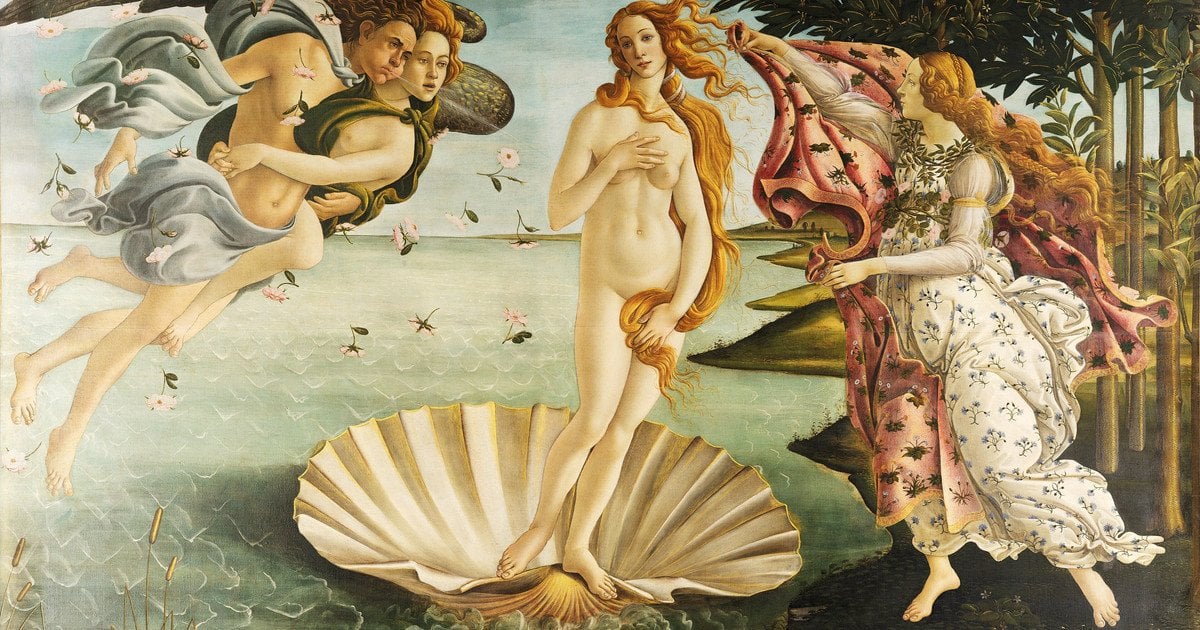
Sandro Botticelli / © Wikipedia
The cross-eyed gaze of Venus in Sandro Botticelli’s famous painting “The Birth of Venus” has attracted the attention of art historians for centuries. Previously, some researchers believed that the strabismus could have been an artistic symbol of piety or beauty. However, scientists have proposed a different explanation.
This is reported by the Daily Mail.
Researchers from Queen Mary University of London suggest that the model who posed for the image of Venus may have had a brain tumor that caused her strabismus.
This refers to Simonetta Vespucci, a renowned beauty of the Florentine Renaissance, often associated with Botticelli’s Venus. According to researchers, an analysis of her portraits revealed signs of a pituitary adenoma.
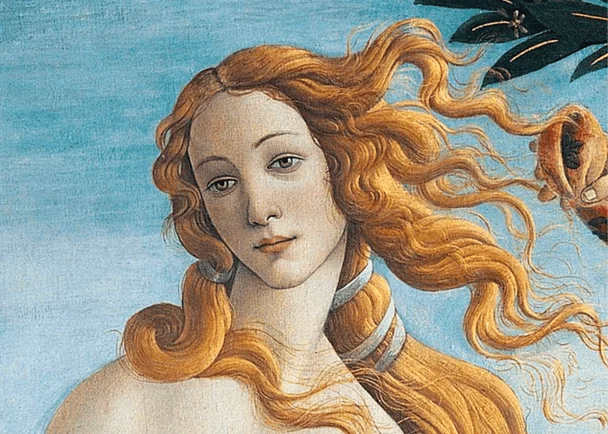
Venus’s cross-eyed gaze in Sandro Botticelli’s famous painting. / © Photo from open sources
This is a common benign tumor that forms on the pituitary gland at the base of the brain. It can affect hormonal balance and cause various physical symptoms, including misalignment of the eyes.
“It is quite possible that the misalignment of the eyes in ‘The Birth of Venus’ – the strabismus, which was later perceived as a sign of piety and beauty – could have been caused by a pituitary tumor,” stated the lead author of the study, Paolo Pozzilli.
How Scientists Tested This Hypothesis
In the study, scientists used a facial recognition algorithm on five portraits of Simonetta Vespucci. The analysis revealed several signs that could correspond to a pituitary adenoma.
Simonetta was well-known in Florentine high society, and Botticelli repeatedly depicted her in his paintings. Researchers note that the artist was so captivated by his muse that he requested to be buried at her feet after her death.
Simonetta died very young, at the age of 23. The circumstances of her death remain a subject of debate.
Symptoms Described by Contemporaries
In the new study, scientists also analyzed documents related to Simonetta’s final days. Specifically, letters between Piero Vespucci and Lorenzo de’ Medici mention that she fainted during a ball and then stayed in a darkened room due to severe headaches, hallucinations, vomiting, and high fever.
“These are all symptoms of a rapidly growing pituitary tumor,” said the first author of the study, Dr. Domiziana Nardelli.
Scientists hypothesize that the cause of death could have been the enlargement of the adenoma and pituitary apoplexy – a sudden dangerous condition involving bleeding or impaired blood supply to the tumor.
Why Researchers Paid Attention to Other Paintings
In addition to the strabismus, scientists noted another possible sign of illness – lactation. In one of Botticelli’s allegorical portraits, a woman is depicted, believed by researchers to be Simonetta. She is shown as if breastfeeding, although it is known that she had no children.
“This is an unusual way to portray her. We believe that this, along with changes in facial features, could indicate real physical symptoms of an adenoma secreting prolactin and growth hormone,” explained Nardelli.
The researchers emphasize that this is a scientific hypothesis based on the analysis of portraits and written sources. However, it may explain why such a characteristic gaze appeared in Botticelli’s Venus.
Illnesses in Renaissance Paintings
This is not the first instance of scientists seeking signs of illness in famous works of art. In 2024, researchers from Paris-Saclay University stated that Michelangelo’s fresco “The Flood” in the Sistine Chapel might depict signs of breast cancer.
In their opinion, the deformed nipple and a small lump in the breast area could have been not an accidental detail, but part of the symbolism of life and death.
In the case of Botticelli’s Venus, the new theory also combines medical analysis and art history. It does not negate the symbolic meaning of the image but suggests that some features of the famous painting might have had a completely real physical origin.
We remind you that in Argentina, police searched the home of the daughter of Nazi officer Friedrich Kajdina to confiscate a masterpiece stolen by her father during World War II.
Comments Sort: New Old Popular Send