

A significant Mayan city has been uncovered in Mexico, remaining unnoticed in an open database for over a decade. Beneath the dense jungle, more than 6,500 structures and traces of a metropolis with up to 50,000 inhabitants were found.
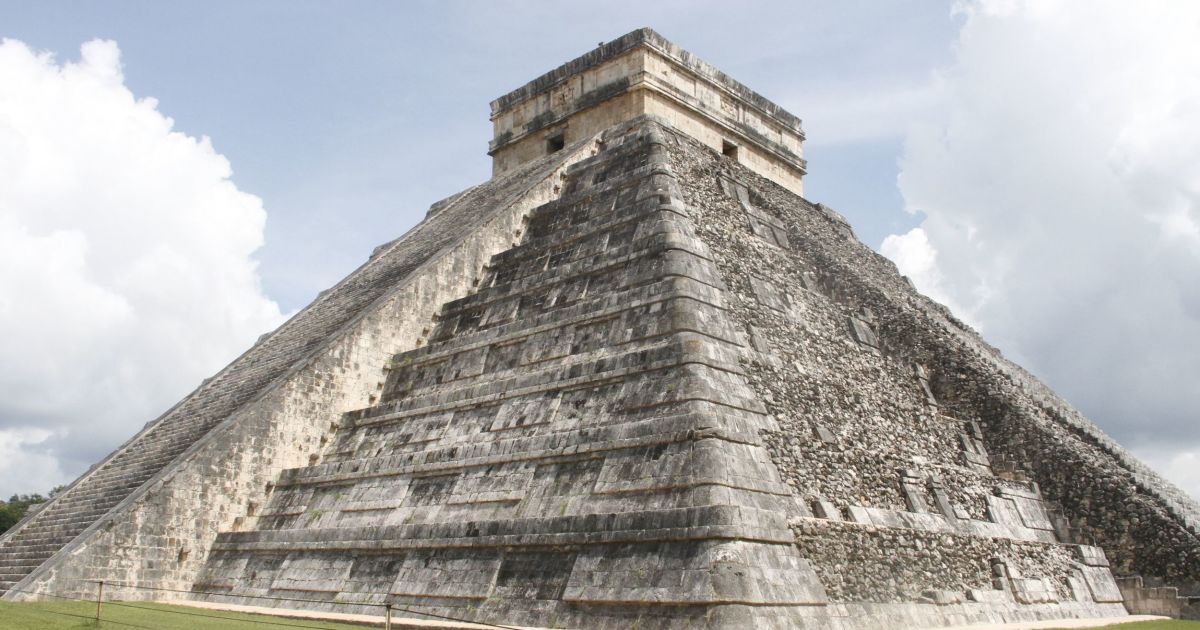
Mayan pyramid / © Associated Press
In Mexico’s Campeche state, archaeologists have discovered a large ancient Mayan city that had been overlooked in open scientific data for over ten years. The find was made by Tulane University graduate student Luke Ould-Thomas, who was reviewing LiDAR survey results and stumbled upon an ecological scan of the area conducted back in 2013.
This was reported by Space Daily.
A simple internet search played a crucial role in the discovery. While analyzing LiDAR data, he found an ecological study on approximately the 16th page of Google search results. It was within these archival materials that data about a previously unknown Mayan city was revealed.
Initially, this data was not collected for archaeological purposes. It was used as part of a project to monitor tropical forests and assess the region’s carbon stocks. However, after reprocessing the information using archaeological methods, researchers uncovered the remains of a major Mayan urban center beneath the thick forest cover.
The newly discovered city has been named Chactun, after a nearby lagoon. Across an area of approximately 122 square kilometers, scientists have identified over 6,500 structures. These include temple pyramids, large plazas, reservoirs, causeway roads connecting different parts of the city, and a ballgame court.
According to the study published in the journal Antiquity in October 2024, Chactun was one of the largest Mayan urban centers. During its peak prosperity, roughly between 750 and 850 AD, it may have been home to 30,000 to 50,000 people. Researchers note that in terms of building density, the city was second only to Calakmul, one of the most renowned centers of Mayan civilization.
Archaeologists have also determined that certain parts of the settlement might be significantly older. This is indicated by the so-called E-Group complexes – architectural structures that the Maya used for astronomical observations and rituals. Specifically, they may suggest that the city’s history could date back even before 150 AD.
Scientists believe that Chactun played a vital role as a major political and administrative center in the region. This is evidenced by its monumental architecture, extensive road network, and access to substantial freshwater resources.
The city declined around 800 to 850 AD, during the period of the so-called Classic Maya collapse, when many large settlements in the Yucatan were abandoned. Researchers cite prolonged climate changes and droughts as potential contributing factors that could have impacted life in densely populated areas.
The discovery was made possible by LiDAR (Light Detection and Ranging) technology, which uses laser pulses to create three-dimensional maps of the terrain. This method allows for the separation of vegetation cover from the underlying topography, revealing structures, roads, and earthworks hidden beneath the jungle.
The study’s authors emphasize that the discovery of Chactun demonstrates the potential of existing scientific archives. They believe that open ecological databases may contain information about other unknown archaeological sites that have not yet been analyzed from an archaeological perspective.
As a reminder, archaeologists previously discovered the ruins of a 4,000-year-old city in northern Iraq that was completely destroyed in a brutal military siege and covered by a thick layer of ash.
Comments Sort: New Old Popular Send