

The Assyrian King List, long considered nearly complete, may conceal significant gaps. Researchers have found evidence of three rulers whose brief reigns were omitted from the established historical narrative.
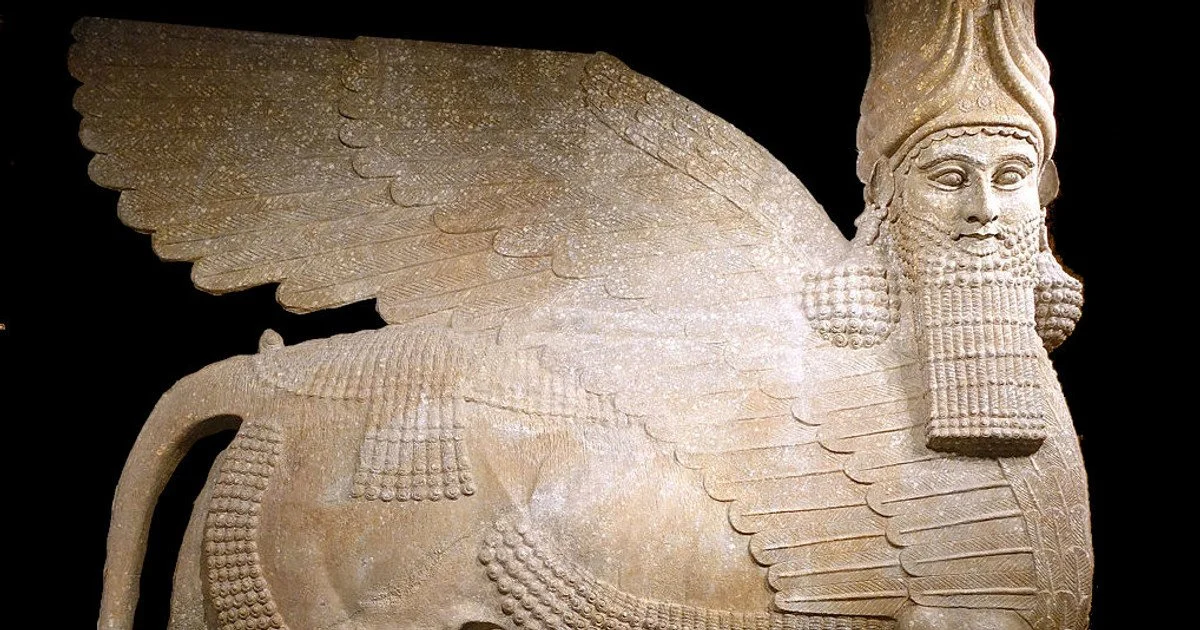
Researchers discovered new Assyrian kings / © wikipedia.org
The saying “history is written by the victors” doesn’t always hold true. However, it accurately explains why storylines and dynasties that are inconvenient for those who come to power—often through questionable means—disappear over time, with chronicles commissioned to deliberately omit bloody passages and family intrigues.
A prime example is three new Assyrian kings who unexpectedly emerged from obscurity, or more precisely, from cuneiform tablets. This discovery has augmented the list of Assyrian monarchs, which had been considered fully formed for over 100 years. Science Alert reports on this.
“Hidden in the Shadows”: Researchers Uncover Three New Assyrian Kings and Another Twist in History
The newly identified rulers of the Neo-Assyrian Empire (circa 1000–609 BCE) were identified by Assyriologists Alexander Johannes Edmonds from the University of Münster and Eckart Frahm from Yale University.
The findings, published in the Journal of Cuneiform Studies, came as a surprise: no one expected to find new rulers of the Neo-Assyrian Empire. However, for centuries, these three rulers remained in the shadows.
All three rulers share common traits: each ascended to the throne in the capital city of Ashur, likely enjoyed significant support from the Assyrian elite during their short reigns, and were ultimately overthrown and partially erased from memory.
The first of these rulers is Tiglath-Pileser, who reigned during the turbulent period of 763–762 BCE. Evidence of his existence was found on a poorly preserved tablet from Nineveh, published over 125 years ago. It records a land grant and contains Tiglath-Pileser’s name, but for a long time, it was mistakenly attributed to Tiglath-Pileser III.
Other sources mention a revolt during that period, preceded by plague and a solar eclipse. Tiglath-Pileser likely instigated this rebellion against his nephew Ashur-dan III, leading to parallel rule over the country.
The second king, Shalmaneser, held power between 747 and 745 BCE. Researchers re-examined artifacts, including a controversial stele found in Iraq in 1894. His name on it was obscured by the name of his successor, Tiglath-Pileser III. The brief and obscure tenure of this Shalmaneser fits perfectly within the era’s political chaos, vassal conspiracies, and nomadic raids.
The last of the trio, Ashur-uballit, who also reigned briefly from 913–912 BCE, experienced usurpation, destruction of his images, and oblivion. One tablet mentions that he allocated silver for the restoration of a vessel for first-class beer in honor of the chief god Ashur.
However, his monument was desecrated: his head, hands, and royal insignia were removed, transforming the statue into a stele honoring the usurper, who did not wish to acknowledge the dubious nature of his ascent to the throne.
This research demonstrates that the history of the Neo-Assyrian Empire was far from the smooth succession from father to son depicted in the “Assyrian King List,” which portrays a well-ordered and bloodless transfer of power.
“It seems the Assyrian King List presents an idealized version of Assyrian royal power, where any unrest and instability have effectively been erased from the annals,” say the researchers.
Archaeological Discoveries: Latest News
We remind you that Mexican archaeologists discovered ancient ruins from the Early Classic period (200–600 CE) with traces of Maya culture in the eastern state of Veracruz. At the Campo Viejo excavation site near the town of Coatepec, researchers found a unique circular stone platform made of flagstone and limestone, which has no parallels in this region.
President Claudia Sheinbaum announced that the government would allocate resources for the research and restoration of the site. In addition to the platform, scientists from the National Institute of Anthropology and History found a monolith 1.88 meters high.
It depicts a scene with two elite figures, one of whom has Maya features, receiving “divine fluid,” likely water from a deity. Archaeologists suggest that this motif may be related to a period of severe drought in the region.
Comments Sort: New Old Popular Submit