

The longest solar radio burst in recorded history lasted nearly three weeks. Scientists have identified its source, but a key question remains unanswered.
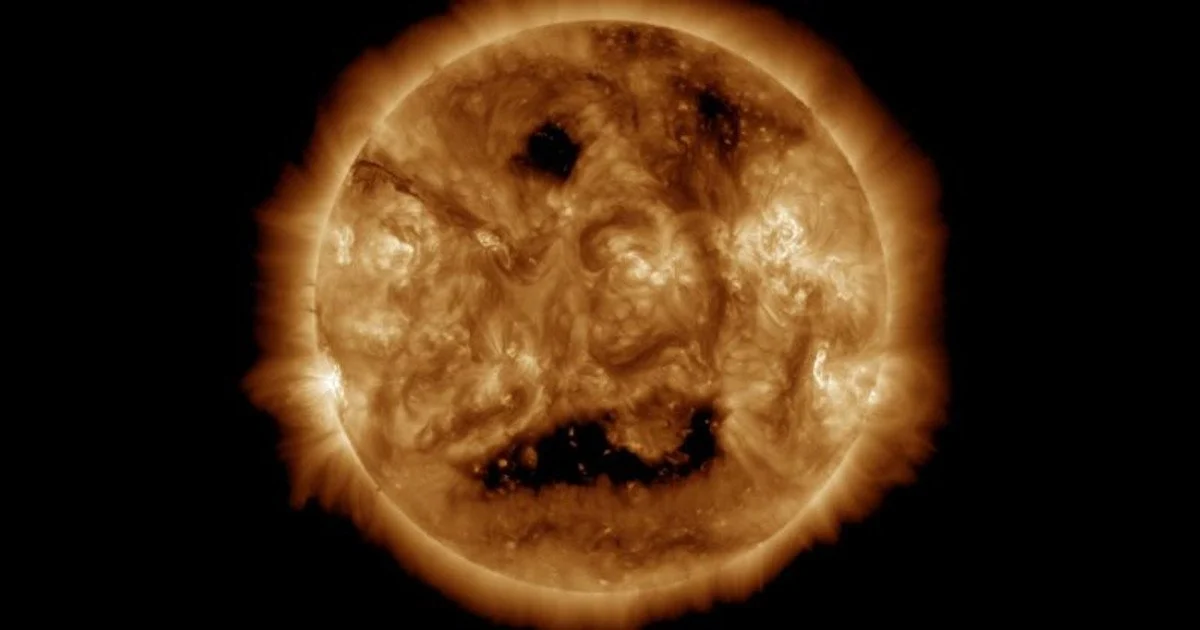
The Sun / © NASA
Scientists have detected an unusual phenomenon on the Sun – a radio signal that persisted for 19 days without interruption. This has been identified as the longest known Type IV solar radio burst, posing a new puzzle for researchers: how did the Sun’s atmosphere manage to sustain such radiation for nearly three weeks?
This was reported by Earth.com.
Normally, the Sun emits continuous radio noise, and individual radio bursts, which arise from the interaction of charged particles with magnetic fields, last from a few hours to a few days. However, in August 2025, astronomers recorded a signal that significantly exceeded these usual time limits.
The previous record for this type of radio burst was set in 2002. That phenomenon lasted about five to six days, whereas the new burst was observed for almost three weeks.
To investigate its nature, a team led by heliophysicist Vratislav Krupar from NASA’s Goddard Space Flight Center utilized data from several space missions. Observations from Parker Solar Probe, Wind, STEREO, and Solar Orbiter were included in the analysis.
As the Sun constantly rotates, the signal’s source periodically disappeared from one spacecraft’s view and reappeared for another. It was through this coordinated observation that scientists concluded it was a single structure rotating with the Sun, rather than a series of separate bursts.
An additional challenge was pinpointing the signal’s origin. The solar corona distorts radio waves, making their source appear much larger and more diffuse. To refine the coordinates, researchers developed a special correction method that accounted for the influence of the solar wind on radiation propagation.
After processing the data, scientists determined that the source of the signal was a helmet-shaped streamer – a large magnetic structure in the Sun’s corona. Such structures are capable of holding plasma and charged particles within closed magnetic loops.
However, this explained only the location of the electrons, not why they continued to radiate for so long. During the study, the team noted that three coronal mass ejections occurred from the same region of the Sun during this period. The scientists hypothesize that each of these could have replenished the magnetic structure with new electrons, sustaining the burst’s activity.
The researchers describe this system as a long-lasting magnetic trap or electron reservoir that rotated with the Sun and periodically received fresh batches of charged particles.
Despite the findings, the exact mechanism behind the phenomenon has not yet been fully revealed. The study’s authors point out that they still cannot definitively state what allowed the electrons to remain trapped for 19 days.
It was also discovered that due to the corona’s influence, the actual size of the source was significantly smaller than it appeared during observations. The team estimates that the distortion magnified its apparent scale by approximately 60 times.
Scientists emphasize that prior to this event, Type IV bursts had not been observed for such an extended duration. These new results could contribute to a better understanding of the behavior of the Sun’s magnetic structures and improve methods for forecasting space weather, which impacts satellites, spacecraft, and other technologies in space.
As a reminder, scientists previously found that powerful solar flares can cause disruptions in electrical circuits on train tracks and provoke fatal train collisions.
Comments Sort by: New Old Popular Submit