

Two structures in the middle of the Egyptian desert might change perceptions of how the pyramids were built. Scientists suggest they were part of a complex water management system.
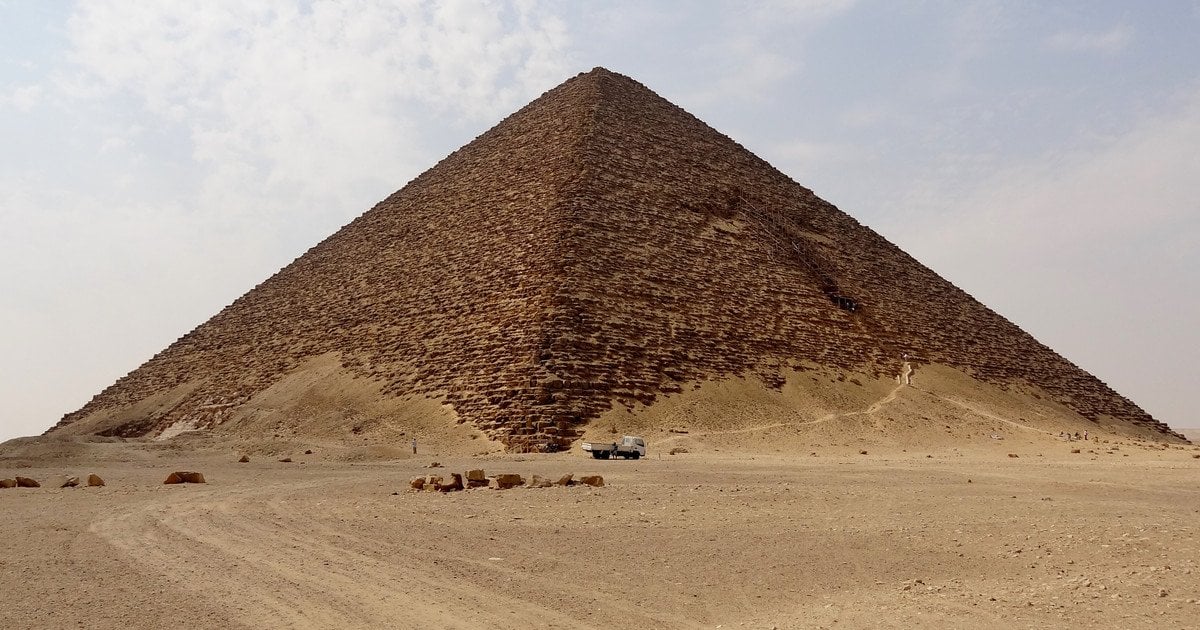
The Red Pyramid of Dahshur, Egypt. Photo: Olaf Tausch/CC BY 3.0
Archaeologists have proposed a new explanation for the purpose of mysterious structures near the Red Pyramid in Dahshur, Egypt. Researchers suggest they might have been part of an ancient hydraulic system that aided in pyramid construction over 4,500 years ago.
This was reported by WP Tech.
The Red Pyramid was built during the reign of Pharaoh Sneferu, approximately 2590–2575 BC. It stands about 105 meters tall and is considered one of the earliest examples of smooth-sided pyramids.
Scientists’ attention was drawn to two elongated structures southwest of the pyramid. For over a century, archaeologists believed they could have been roads or ramps for transporting heavy construction materials. However, researchers from the Paris-based Paleotechnic institute have proposed an alternative theory.
Using satellite imagery, terrain analysis, and watershed mapping, they concluded that the structures might have been connected to Wadi Dahshur, a currently vanished watercourse.
According to the new hypothesis, both constructions could have been components of a dam system. The eastern structure likely helped retain water, while the western one may have slowed the flow, trapped sediment, and regulated water intake into a drainage channel.
Such a system could have not only protected the area from flash floods but also provided waterways for transporting goods, including limestone blocks, timber, food, and other essential resources, closer to the construction site.
The new study also complements the hypothesis about the connection between Egyptian pyramids and ancient Nile branches. Scientists are investigating whether waterways could have been used during the construction of over 30 pyramids between Giza and Lisht. The study’s authors do not rule out the possibility that undiscovered hydraulic structures related to the construction of ancient monuments may still lie hidden beneath the sands of the Nile Valley.
We previously reported that for decades, archaeologists found perfectly preserved brains in ancient skeletons, and a new study has finally explained the chemical processes that prevent the decay of these soft tissues.
Comments Sort: New Old Popular Send